Handwriting Your Job-Hunting Résumé in Japan: Key Points to Watch Out For
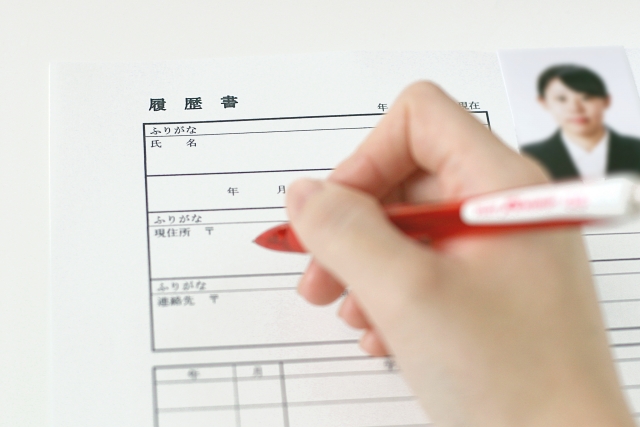
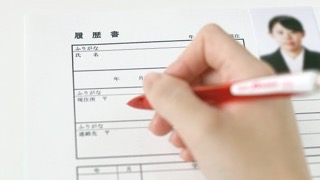
More and more companies in Japan now let you submit your entry sheet (ES, the application form used in Japanese job hunting) online. Some even have you type everything in, then print it out and mail it.
Some companies, however, still ask for a résumé (rirekisho) written entirely by hand. If you're used to filling out ES forms online, handwriting one can feel daunting.
So in this article, we've put together key points for writing an entry sheet by hand!
Contents
What are the benefits of a handwritten entry sheet?
The biggest benefit of handwriting your résumé or ES is that it conveys your enthusiasm and personality more easily.
A handwritten ES tells the reader much more than its content alone: whether you wrote carefully, whether any typos or missing characters slipped through, and so on. It also takes time to complete, so some companies require handwriting in order to hire people who truly want to join, rather than those who just applied on a whim. You can't reuse the same document you submitted to another company, so you have to spend real time on each application. That's why handwriting becomes one way for job seekers to show their enthusiasm to a company.
Also, when no format is specified, most students fill out their forms on a computer. A handwritten ES therefore stands out, and it's one way to set yourself apart from other applicants. Evaluation criteria vary by industry and company, but an ES that is neat and easy to read tends to make a good impression.
If you want to show your enthusiasm to a company you're especially keen on and no format is specified, we recommend writing it by hand.
Always write your entry sheet in pen
When preparing a handwritten ES or résumé, get the following ready:
- 3–5 blank entry sheets or résumé forms
- A pen (no erasable gel pens)
- A mechanical pencil or regular pencil for drafting
- An eraser
If you make a mistake in a character or write in the wrong box, we don't recommend fixing it with correction fluid or correction tape.
Correction tape makes the document look less trustworthy, as if it may not have been written by you. If you make a mistake, rewrite the whole thing on a new form. That's why it's reassuring to have several blank entry sheets or résumé forms on hand.
For important documents like a résumé or entry sheet, never use an erasable pen.
The ink can disappear with heat, sometimes in places you didn't intend, so use a regular non-erasable ballpoint pen for important documents.
Write calmly at a clean, flat desk.
Handwritten documents convey enthusiasm and personality well, but messy or hard-to-read handwriting leaves a negative impression. A résumé can shape the first impression a company has of you, so write in an environment where you can concentrate fully.
Attach your ID photo last
On a typical Japanese résumé, the top section has boxes for basic information such as your name, address and education history. Many people probably stick on their ID photo (the formal résumé photo) as they fill in this section. But this is where you need to be careful.
The sections that come later, such as your motivation for applying and your self-promotion, contain a lot of text, so they're where mistakes are most likely. And mistakes aren't the only issue: you may decide to change what you've written as you go. If that happens, and the photo is already attached, you'll have to throw it away along with the form.
Fill in every handwritten section first, then attach the ID photo at the very end to finish. That way, you won't waste a photo.
Use a draft to prevent typos and check the layout
Don't start writing on the real form in pen right away. We recommend writing it out once in mechanical pencil or pencil first. A draft lets you check the balance of your character sizes and confirm any kanji you're unsure about.
For a résumé, the content matters, of course, but how easy it is to read matters too. Even if you don't think your handwriting is good, simply writing a little more carefully can change how it turns out.
If you go over your pencil draft in pen, be sure to wait a while before erasing so the eraser doesn't smear the ink.
Don't forget to make a copy before submitting!
Once your résumé is finished, it's a good idea to make a copy and keep it. Unlike an online entry sheet, which leaves you with the data, a handwritten résumé is gone from your hands once you send it.
I've been there myself: I got to the interview stage and panicked because I couldn't remember what I'd written on my entry sheet. Make a photocopy at home, at a convenience store or at school, or take a photo with your phone, so you can review what you wrote before the interview.
Summary
In this article, we covered what to watch out for when writing an entry sheet by hand.
Unlike typing online, a handwritten ES also gives you room to add your own touches, such as using colored ink or writing key words a bit larger.
(*Before you do, check that the company hasn't specified a type or color of pen.)
Keep these points in mind, and try creating an entry sheet that shows your strengths!

- I love writing and I'm currently studying copywriting. I turn the questions our guests often ask and the things I notice in the studio into easy-to-read articles about job-hunting and ID photos, so that even first-timers can understand them.
Latest posts
 Job-Hunting ID PhotosOctober 28, 2026【Job Hunting on a Budget】How to Get High-Quality ID Photos Affordably
 Hair, Makeup & OutfitsOctober 26, 2026Can I Take a Job Hunting Photo with My Top Button Open?
 Job-Hunting TipsOctober 26, 2026[Winter Hiring / Job Hunting Start] What Are Smart Cold Weather Countermeasures for Winter Job Hunting?