How Long Does Job Hunting Take After Graduation in Japan? Moving from Part-Time Work to a Full-Time Job, and When to Get Your Photo Taken
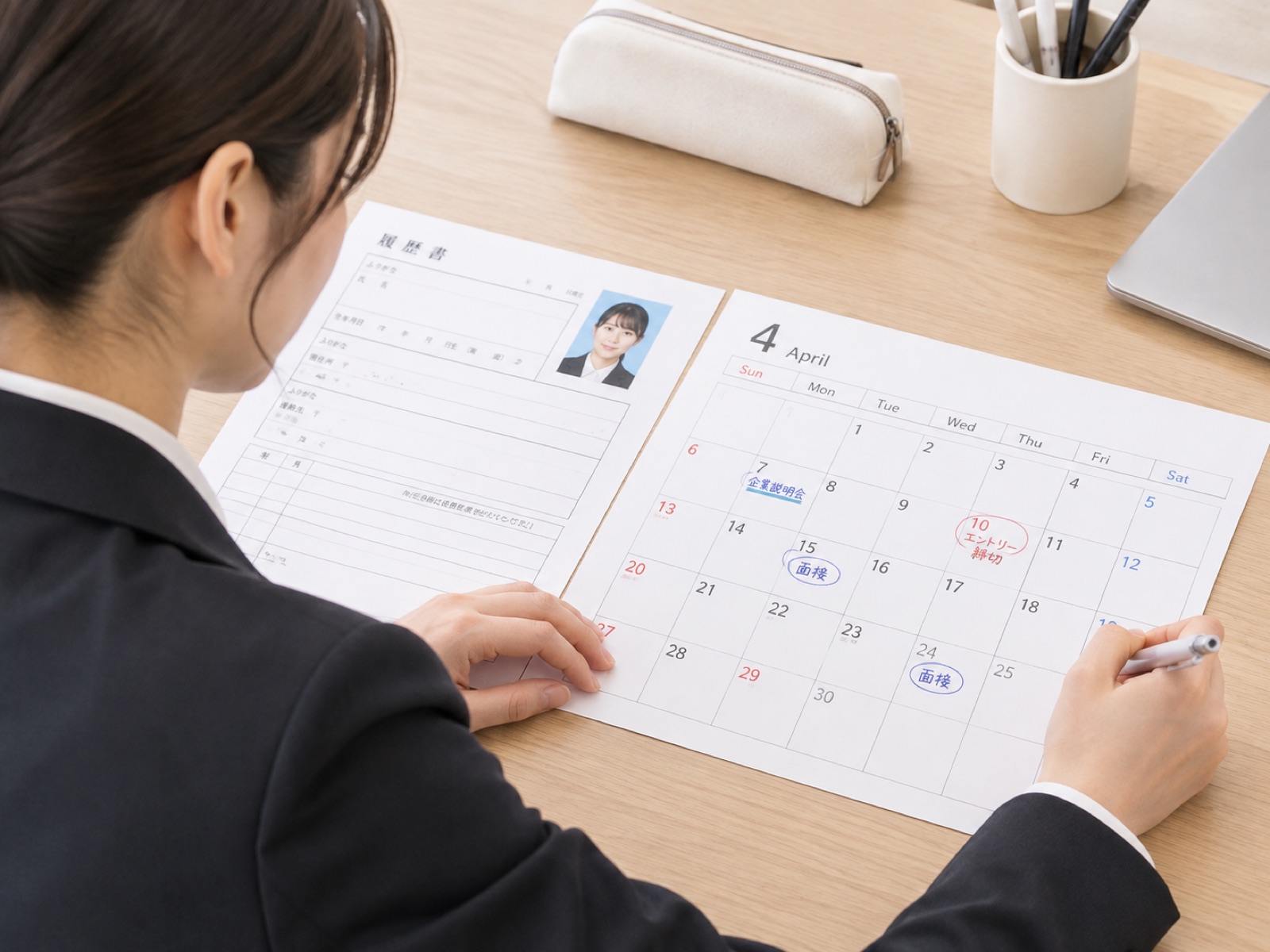
For kisotsu job seekers (people who have already graduated without securing a full-time job), how long the job hunt takes varies greatly depending on the person and the companies you apply to. There is no fixed timeline, so the quickest path is to understand the flow (job search → application documents → document screening → interviews) and build your own schedule.
Get your job-hunting photo taken before you submit your application documents. This article walks you step by step through job hunting while keeping your part-time job, and explains when to take your photo.
Walking distance from Shinjuku Station2 min from Shinjuku-gyoemmae Station Need it done fast & easy?Same-day booking OKSame-day pickup OK
 Book Now
Contents
- There's no set job-hunting period after graduation: learn the flow and set your own milestones
- Graduates can sometimes still apply through the new-graduate track
- 4 steps to job hunting while keeping your part-time job
- Use your part-time work experience in your application documents
- When to take your job-hunting photo: before submitting your applications
- Prepare for interviews while waiting for screening results
- Summary
There's no set job-hunting period after graduation: learn the flow and set your own milestones
Unlike graduating students, who all start job hunting at the same time, people who have already graduated have no shared starting line. You decide for yourself when to start and when to finish.
How long it takes depends on how many companies you apply to, how many selection rounds there are, and how you balance it with your part-time job. Companies also differ in how long it takes to hear back after document screening and how many interviews they hold.
That's why it's important to first understand the overall flow and set milestones for each stage. Once you can see what needs to be done by when, it becomes much easier to make progress alongside your part-time job.
Graduates can sometimes still apply through the new-graduate track
Japan's Ministry of Health, Labour and Welfare, in its Guidelines for Securing Employment Opportunities for Young People, asks companies to allow people to apply through the new-graduate hiring track for at least 3 years after graduation. Having already graduated doesn't necessarily mean you're limited to mid-career job openings.
However, not every company accepts applications from people who have already graduated. Before applying, check the "eligibility" section of the job posting. If it says something like "graduates welcome" or "within 3 years of graduation," you can apply.
For advice and support, try Hello Work, Japan's public employment service. Its Shinsotsu Oen Hello Work offices (support centers for new graduates) are open to students and to people who graduated within roughly the past 3 years. There is also Wakamono Hello Work, aimed at young people looking for full-time employment.
4 steps to job hunting while keeping your part-time job
Job hunting while working part-time can be broken down into 4 main steps. The table below summarizes what to do at each stage.
| Step | What to do | Key point |
|---|---|---|
| 1. Find job openings | Search job sites, Hello Work, and job placement services | Filter by "graduates welcome" and "no experience required" |
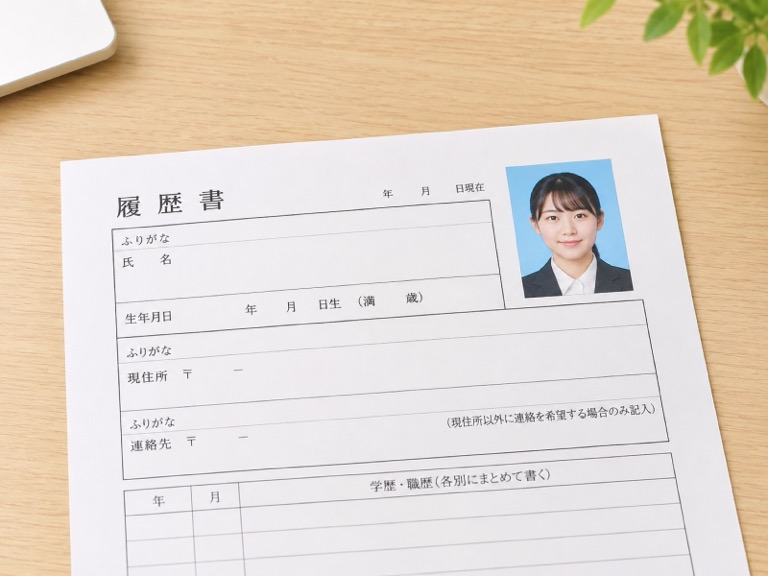
| 2. Prepare application documents | Prepare your rirekisho (Japanese-style resume), shokumu keirekisho (work history), and job-hunting photo | Get your photo taken at this stage |
| 3. Document screening | Apply and wait for results | Start preparing for interviews while you wait |
| 4. Interviews | One to several rounds, depending on the company | Coordinate dates with your part-time shifts |
These 4 steps don't always happen one company at a time. If you apply to several companies in parallel, steps 3 and 4 will often overlap.
One way to plan your schedule is to set your own milestones, such as "spend the first 2 weeks searching for jobs and preparing documents, then apply to X companies per week." Choose a pace that fits around how busy your part-time job is.
Use your part-time work experience in your application documents

When you apply after graduating, employers may look at what you have been doing since graduation. If you've kept up a part-time job, that experience is solid material to write about.
For example, reflect on points like these:
- What kind of work you did, and for how long
- Responsibilities you were given and things you improved
- How that experience can be applied to the job you're applying for
Sticking with a part-time job for a long time shows that you are a reliable, hardworking person. Also be ready to explain, in your own words, why you want a full-time position.
If you're submitting a handwritten resume, see also Tips for writing a handwritten job-hunting resume.
When to take your job-hunting photo: before submitting your applications
We recommend getting your job-hunting photo taken before you submit your first application. If you wait until you find a job you want to apply for, you may end up rushing to meet the deadline.
Once you start searching for jobs, schedule your photo session around the same time you prepare your documents. Once you have your photo, you can use the same one for applications to other companies too.
These days many applications are submitted online, and you may be asked to submit your photo as a digital file. It's best to have both prints for paper resumes and digital files for online applications. The standard Japanese resume photo is 4 cm tall × 3 cm wide, but if the company specifies a different size, follow their instructions.
For what to bring on the day of your shoot, see What to bring when taking job-hunting ID photos at a studio.
Prepare for interviews while waiting for screening results
After submitting your documents, start preparing for interviews while you wait for the results. If you only start after passing the document screening, you may not have enough time before the interview.
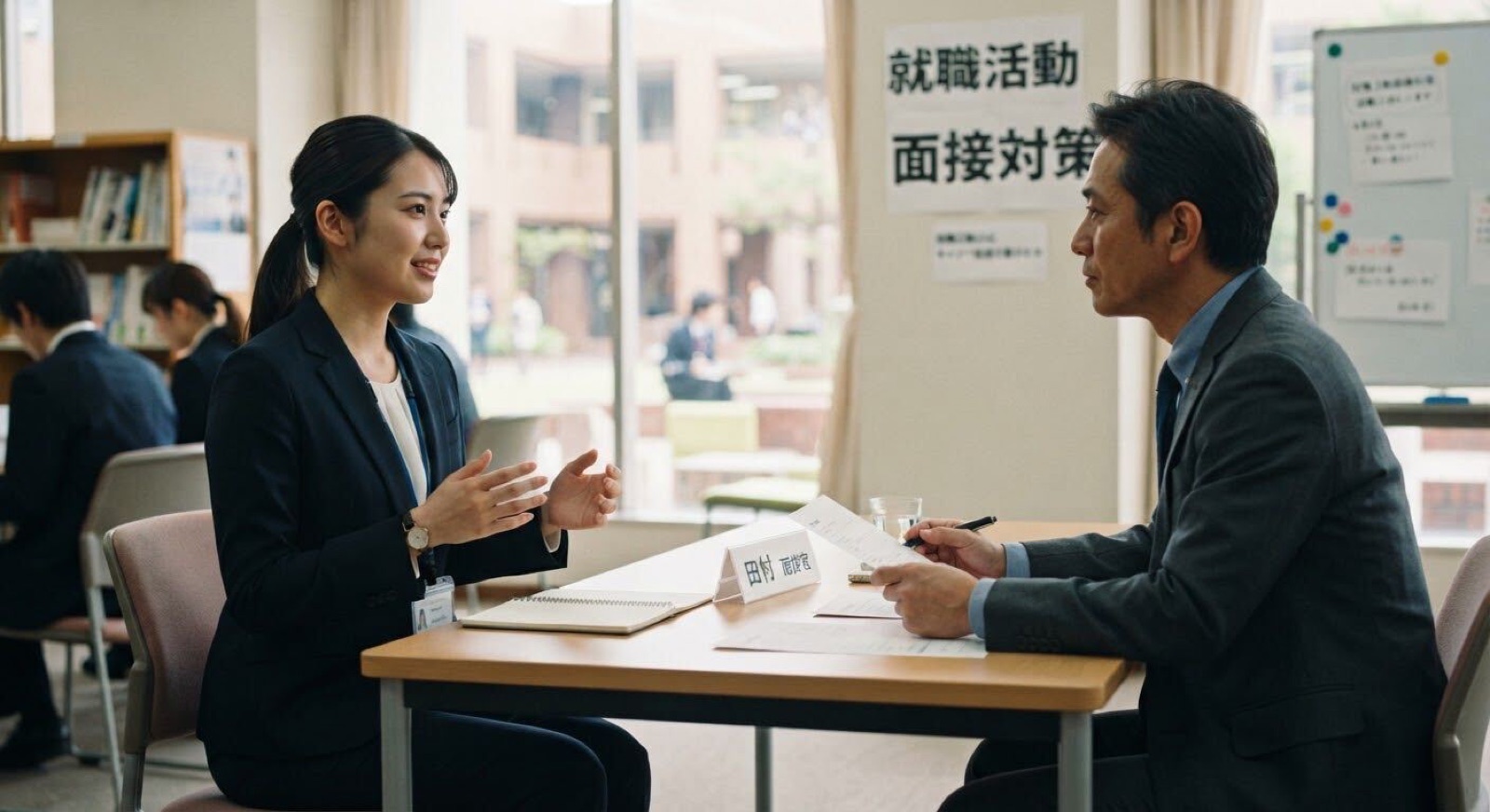
In interviews for people who have already graduated, preparing for questions like these will help you answer calmly:
- How have you spent your time since graduating?
- Why are you looking for a full-time position now?
- What have you learned from your part-time job?
Interview dates may clash with your part-time shifts. Letting your workplace know your shift preferences early makes it easier to respond when an interview comes up on short notice.
Check the dress shirt you'll wear to the interview for stains beforehand. How to remove sebum stains from dress shirts may also help.
Summary
How long job hunting takes after graduation varies greatly depending on the person and the company. Breaking the process into 4 steps and setting your own milestones makes it easier to move forward while keeping your part-time job.
- Within 3 years of graduation, you may be able to apply through the new-graduate track
- In your application documents, present your part-time work experience positively
- Get your job-hunting photo taken before submitting your first application
- Start preparing for interviews while waiting for document screening results
- I have conducted hiring interviews at both listed companies and startups. Drawing on my experience reviewing applications and ID photos as an interviewer, I explain what recruiters really look at in your photo and entry sheet.
 Walking distance from Shinjuku Station2 min from Shinjuku-gyoemmae Station19Studio Shinjuku — ID & Job-Hunting PhotosNeed it fast? No problemSame-day booking & same-day pickupCome empty-handed, shoot right awaySuit compositing option availableBook Now
Latest posts
 Job-Hunting TipsNovember 26, 2026How Long Does Job Hunting Take After Graduation in Japan? Moving from Part-Time Work to a Full-Time Job, and When to Get Your Photo Taken
 Job-Hunting ID PhotosNovember 26, 2026Photos for a Part-Time Job Résumé in Japan: Size, How to Take Them, and Smartphone Tips
 Passport, Visa & Other ID PhotosNovember 25, 2026How to Take an ID Photo with Your Smartphone [5 Steps]: Background, Lighting Tips and Printing